
Glass Partition vs Gypsum Partition: Which One Suits Your Space Better?
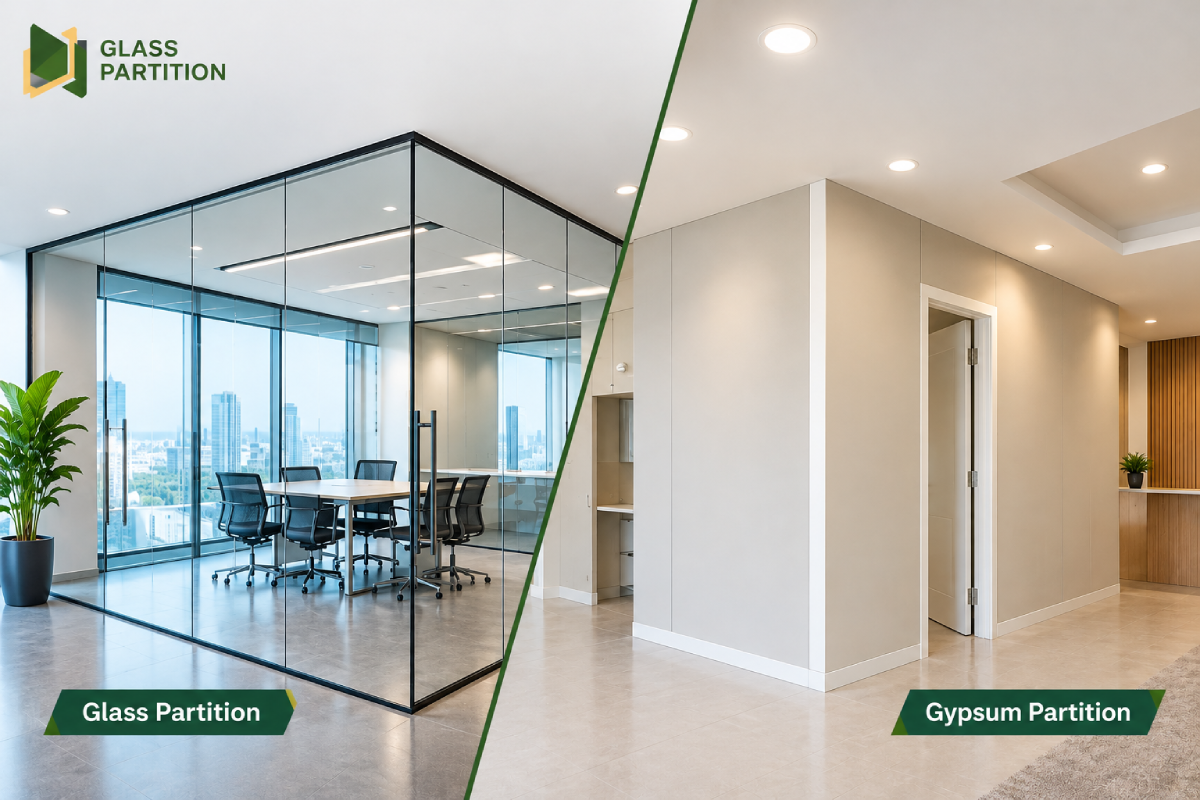
You are dividing a room, but it doesn’t always mean that you need to build a permanent brick wall for it. A partition system is a fast and flexible option to help you create enclosed areas within a space. Among partition systems, the two most common ones are a glass partition and a gypsum partition. They both will help you divide a large room into a functional zone to offer different results. If you need to decide which one is best for your office, villa, apartment, or commercial space, here is a glass partition vs gypsum partition comparison.
Glass vs Gypsum Partition: Various Factors About Each System
A glass partition will keep your space visually open to let the natural light pass through. As for gypsum, it will be a solid wall that will provide better privacy, insulation, and many built-in features. Other factors that help you differentiate between these two are as follows.
Glass Partitions Keep Spaces Feeling Open
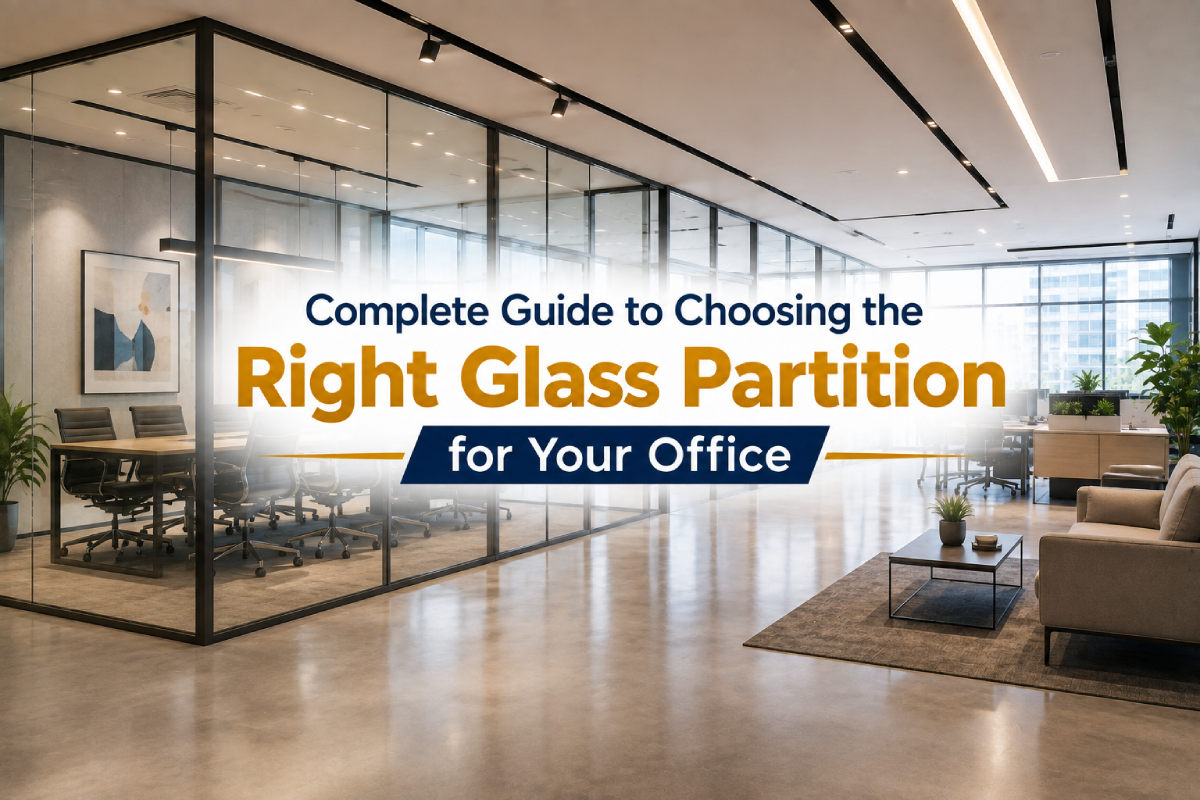
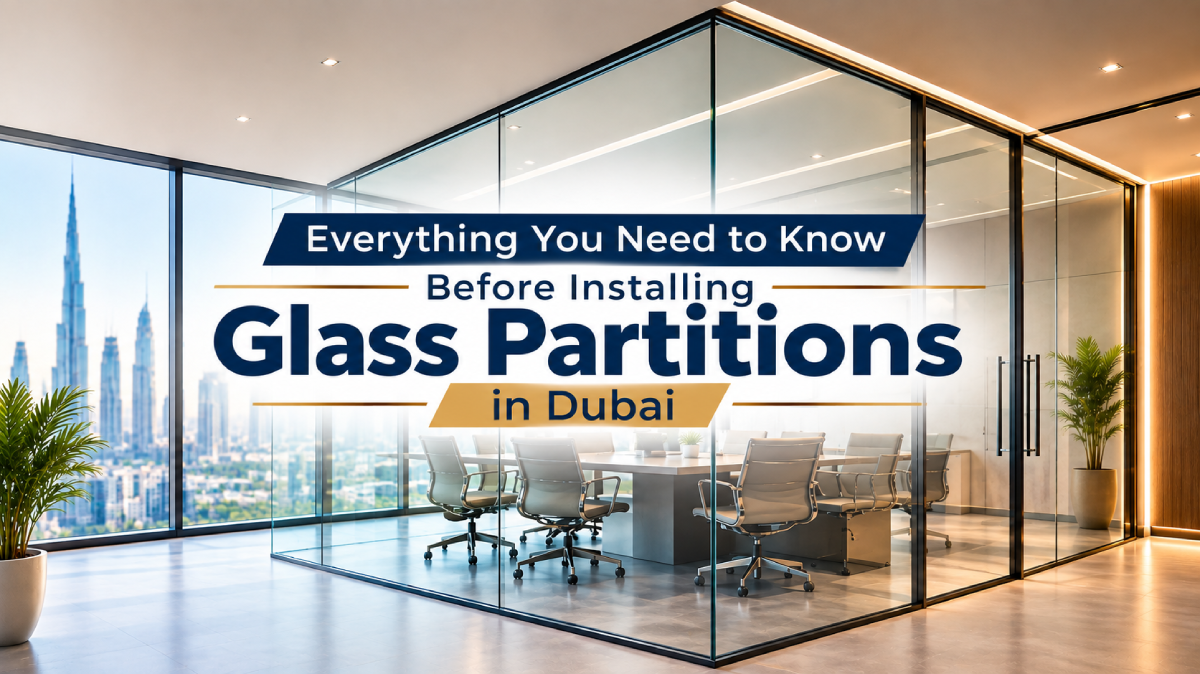
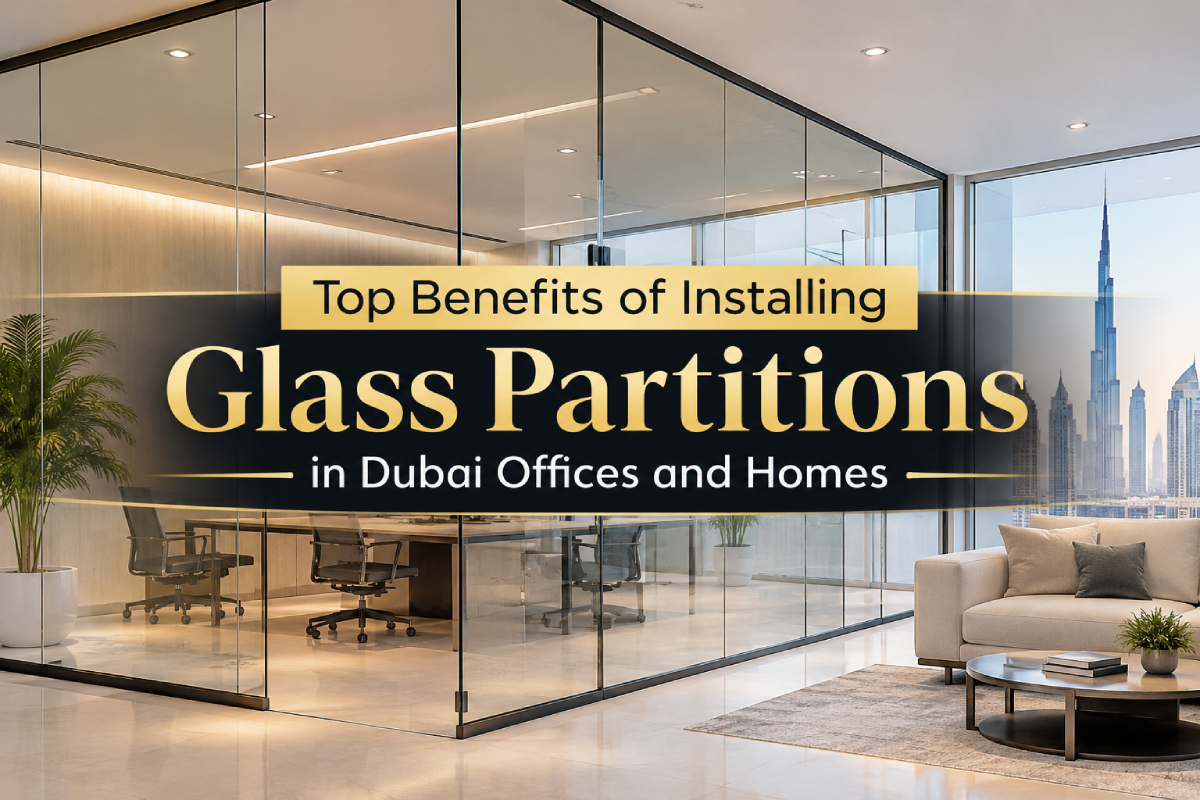
The biggest advantage of glass partition is that they will separate the room without visually enclosing it. Glass partitions can divide the areas in a space while letting light to travel through the entirety of it. This makes the glass partition system a better choice for meeting rooms, executive offices, boardrooms, and modern home offices. Clear glass will offer a better sense of openness , while frosted or tinted options provide better privacy.
Gypsum Partitions Give You a Real Wall
A gypsum partition system is lightweight and is usually built around a metal framework. It’s not like a clear glass solution; instead, it creates a solid visual barrier that you might need for your bedroom, storage space, or any other area where you require privacy. It is a perfect surface that you can use for painting, wallpapering, wall moldings, artwork, and other decorative treatments.
Which Provides Better Privacy?
When it comes to privacy, the advantage goes to gypsum; a person on the other side of it won’t be able to see through. As for a glass system, the privacy will depend on the material’s specification. Clear glass will offer little privacy , while frosted or acid-etched glass improves it.
What About Sound?
Neither a glass partition nor a basic gypsum partition will automatically offer complete soundproofing. The acoustic performance of a partition system depends on the complete wall or partition system. This will include its thickness, seals, cavities, insulation, doors, joints, and construction type. A well-designed gypsum partition will have insulation in its cavity to make it a strong choice. A glass system can also offer acoustic control with double glazing-option that have proper acoustic seals.
Which Is More Flexible for Electrical Work?
The advantage goes to the gypsum partition system because it has a cavity. This allows you to route electrical cables, sockets, switches, and other services during wall construction. This is the reason gypsum is useful for offices where partitions need many power outlets or connections. Glass partitions will also accommodate electrical needs, but the process depends on the system and its surrounding floor and ceiling arrangements.
Glass Creates a More Contemporary Look
The design of the partition system will be the deciding factor. A glass partition offers a modern, lightweight appearance. Black-framed glass is ideal for industrial aesthetics, while frameless glass gives off a simple yet elegant appearance. Glass Partition work best if you wish to make your smaller office feel larger. As for gypsum, it has a different character and can blend easily with existing walls, and you can paint it for a preferred finished look. You can even install wallpapers, moldings, shelving, or decorative panels.
Installation and Disruption
Both of these systems can be fitted faster than a simple masonry walls. A glass partition system requires you to do proper measuring, framing or fixing profiles, and installation of glass panels. Other additions will include fitting doors and applying seals where necessary. A gypsum partition will need proper framework fitting, board fixing, and insulation. The installer will do joint treatment, sanding, and final finishing touches. The difference is what happens after the partition is fitted.
Cost Considerations
The final cost for either of these two partition systems depends on their specification instead of the material. A basic gypsum partition is an economical choice when you need to divide large solid areas. Glass prices will vary based on whether you choose framed or frameless construction, glass thickness, frosted treatments, acoustic glazing, and hardware. A gypsum partition cost will increase when you add insulation, premium finishes, curves, and decorative features. When you compare quotations, you need to make sure you’re comparing proper specifications.
Which One Should You Choose?
You should choose a glass partition system if your priorities include natural light, visual openness, modern appearance, and a spacious feel for smaller interiors.
A gypsum partition is a better choice if you need visual privacy, a solid surface for decoration, wall-mounted furniture or fixtures, or greater insulation flexibility.
Both of these partition systems can be combined , like having a gypsum partition in an office’s storage area while service areas have glass partitions.
Final Thoughts
The decision between a glass partition and a gypsum partition is not just about choosing which material looks better. It is about what your place needs. A glass partition is useful for getting separation without letting go of that light, openness, and visual connection. Gypsum is suited for a space where you require privacy, acoustic treatment, and a solid decorative surface. Once you carefully consider all the factors, you can make a better decision when choosing a glass partition or a gypsum partition for your space.